Brooklyn Multi Family vs Single Family: 2026 Comparison
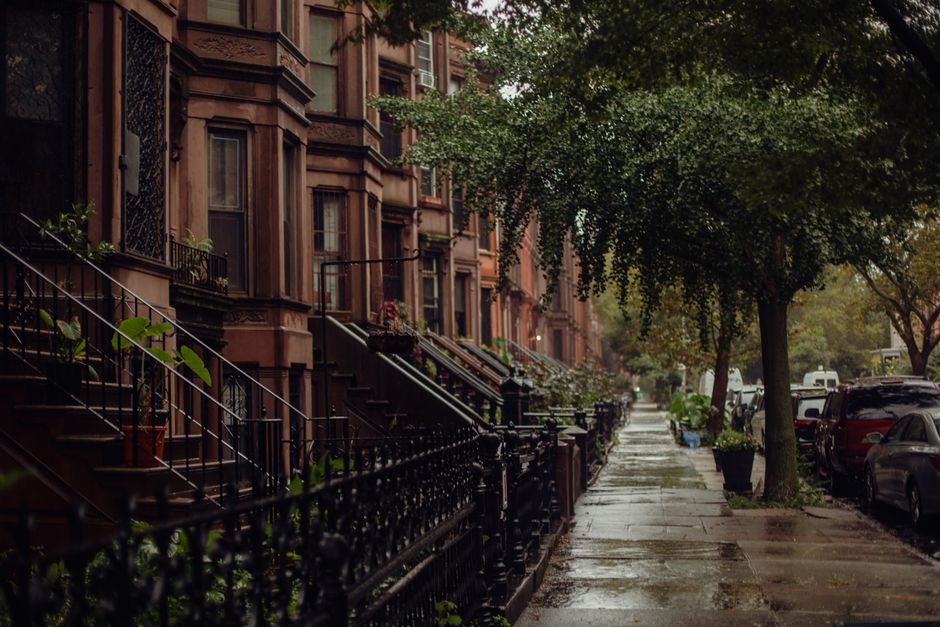
Brooklyn multi-family vs single-family in 2026 comes down to four trade-offs: down payment (3.5 to 25 percent vs 3.5 to 20 percent), vacancy risk (spread across units vs 100 percent of one), landlord duties (yes vs no), and mortgage offset (1 to 2 rental units paying the note vs full out-of-pocket).
Brooklyn Multi-Family vs Single-Family: What Each Actually Means
Single-family. One legal dwelling unit. One household. The buyer is the only occupant. No tenants, no rent collection, no Building Department multi-unit code requirements. The decision is entirely about lifestyle and resale, not about cash flow.
Multi-family. Two or more legal dwelling units in one building. In Brooklyn, the common configurations are two-family (duplex), three-family (triplex), and the occasional four-family. The buyer occupies one unit and rents the others, or rents all of them as an investor. Decision factors are cash flow, tax treatment, and landlord workload.
The Brooklyn distinction matters more than in most markets because so much of the borough's housing stock is legal two- and three-family. The choice is not theoretical, it is what 30 percent of listings actually are.
Down Payment: Multi-Family vs Single-Family in Brooklyn
| Property Type | FHA Owner-Occupant | Conventional Owner-Occupant | Investor (Non-Occupant) |
|---|---|---|---|
| Single-family | 3.5% | 5% to 20% | 20% to 25% |
| Two-family | 3.5% | 5% to 15% | 25% to 30% |
| Three-family | 3.5% | 15% to 20% | 25% to 30% |
| Four-family | 3.5% | 20% to 25% | 30% |
The headline rule sellers and listing agents often quote ("25 percent down for multi-family in Brooklyn") is the investor case. Owner-occupants on FHA can buy a four-family with 3.5 percent down if they live in one unit. This is one of the single largest financial advantages multi-family offers Brooklyn buyers.
Vacancy Risk: Multi-Family Spreads, Single-Family Concentrates
If a single-family property is unoccupied, the owner loses 100 percent of any potential rental income. Most single-family Brooklyn buyers are not renting at all, so vacancy is a non-issue — they live there. But if they later turn it into a rental and the tenant moves out, the income drops to zero until the next tenant lands.
Multi-family spreads that risk. If one unit in a three-family is vacant, the other two units continue paying. The owner-occupant in the lower duplex with a tenant upstairs has 100 percent of mortgage offset when occupied, drops to whatever the lower unit's market rent is when the upstairs unit turns. The math is more forgiving.
The risk Brooklyn multi-family buyers underestimate is not vacancy. It is bad tenant. NYC eviction is slow, expensive, and court-supervised. A non-paying tenant in a Brooklyn two-family can cost the owner 6 to 12 months of rent plus legal fees before the unit is recovered. Screen tenants harder than you think you need to.
Landlord Duties: Multi-Family Buyer = Landlord
Buying a multi-family in Brooklyn and renting any unit makes you a landlord under NYC law. Non-negotiables:
- Heat October 1 to May 31, codified minimum temperatures.
- Annual HPD property registration if you have one or more rental units.
- Warranty of habitability (you fix things, tenants can withhold rent if you do not).
- Lead paint, bedbug, and mold disclosures.
- Eviction is court-only, no self-help.
Many Brooklyn buyers hire a property manager at 6 to 10 percent of collected rent to handle the day-to-day. Other buyers do it themselves and treat the rental yield as a part-time job. Either path works. Going in thinking it is fully passive does not.
Mortgage Offset: The Multi-Family Math in Brooklyn
The case for multi-family in Brooklyn boils down to one number: monthly out-of-pocket housing cost. Sample math on a $1.4M two-family in Bensonhurst, owner-occupant in the lower unit:
- Purchase price: $1.4M
- Down payment (15% conventional): $210,000
- Mortgage on $1.19M at 6.1%: about $7,200/month (principal and interest)
- Taxes and insurance: about $1,500/month
- Total monthly carry: ~$8,700
- Upstairs tenant rent (Bensonhurst two-bedroom): $2,400/month
- Net out-of-pocket: about $6,300/month
Compare to a single-family in the same price band: full $8,700 monthly carry, no tenant offset. The multi-family buyer is housing themselves for $2,400 a month less. Over 10 years and at average rent escalation, that compounds to roughly $300K in saved housing cost. That is the real argument.
Brooklyn Inventory: Multi-Family vs Single-Family in 2026
- Multi-family active listings (June 2026): roughly 1,600 to 2,000 across major platforms. Realtor.com shows 2,000+, Trulia 1,600+, Redfin 1,518.
- Multi-family-heavy neighborhoods:Bensonhurst, Bedford-Stuyvesant, Sunset Park, Crown Heights, Bushwick, Bay Ridge.
- Single-family detached-heavy neighborhoods:Dyker Heights, Mill Basin, Canarsie, Marine Park, Gerritsen Beach, parts of Bay Ridge.
Active single-family inventory is harder to count cleanly because most platforms lump it under "single-family residential" without separating attached row houses from detached. Working number for 2026 is roughly 1,200 to 1,800 active single-family-marked listings borough-wide.
What It Costs to Convert a Brooklyn Multi-Family to Single-Family
Some buyers purchase a multi-family townhouse intending to convert it to a single-family residence (eliminating the upper units to expand their own living space). 2026 NYC conversion costs run $700 to $1,200 per square foot per Gallery KB data, depending on:
- Existing condition of the building
- Whether the conversion requires structural work (removing interior walls, restoring original layouts)
- DOB approval timeline and required permits
- New Certificate of Occupancy filing
A 3,000 sqft three-family converting to single-family runs roughly $2.1M to $3.6M in conversion costs alone, on top of the original purchase. Often that math only works in the brownstone belt where converted single-family townhouses resell at $4M+. Not a strategy for Bensonhurst or Sunset Park.
Frequently Asked Questions
Should a Brooklyn first-time buyer choose multi-family or single-family in 2026?
Multi-family fits first-time buyers who want rental income to lower their effective housing cost and are comfortable being landlords. Single-family fits first-time buyers who want full control of the property and no tenant relationship. For pure financial leverage on a tight budget, multi-family with FHA owner-occupancy (3.5 percent down on two-to-four units) is the highest-leverage entry point in Brooklyn.
What down payment is required for a multi-family in Brooklyn?
FHA owner-occupants: 3.5 percent on two-to-four-unit. Conventional owner-occupants: 5 to 25 percent depending on unit count. Investors who do not occupy: 25 to 30 percent. The single biggest variable is whether you live in one unit.
What happens if I cannot find tenants for my Brooklyn multi-family?
You lose the rent on the empty unit until it is re-leased. Other units continue paying if they are occupied. Vacancy in Brooklyn multi-family is usually 1 to 3 months for an average unit. Plan a 6-month operating reserve in case the gap stretches or you get a non-paying tenant (NYC eviction is slow).
Can rental income from a Brooklyn multi-family help me qualify for the mortgage?
Yes. Most lenders count 75 percent of documented or projected rental income toward the borrower's qualifying income (the 25 percent vacancy factor). Existing leases, the property's prior rent roll, or a market rent appraisal are the standard documentation. Talk to a lender who handles Brooklyn multi-family regularly; the underwriting is different from single-family.
Which Brooklyn neighborhoods have the most multi-family inventory in 2026?
Bensonhurst, Bedford-Stuyvesant, Sunset Park, Crown Heights, Bushwick, and Bay Ridge run the deepest multi-family inventory. East New York, Gravesend, Canarsie, and Sheepshead Bay also carry steady volume. Brownstone-belt neighborhoods (Park Slope, Cobble Hill, Brooklyn Heights) have multi-family stock but at $3M-plus price points.
Which Brooklyn neighborhoods have the most detached single-family inventory in 2026?
Dyker Heights is the headline neighborhood for detached single-family with driveways. Mill Basin, Canarsie, Marine Park, Gerritsen Beach, and parts of Bay Ridge also have meaningful detached inventory. Most other Brooklyn neighborhoods are attached row-house or brownstone-style "single-family" rather than truly detached.
Brooklyn Multi Family vs Single Family: 2026 ComparisonBrooklyn Real Estate2026-06-27T07:54:53+00:00