Moving to Brooklyn from Manhattan in 2026: Real Estate Guide
Moving to Brooklyn from Manhattan in 2026 saves the median renter $1,000 a month and the median buyer $368,000 on purchase price, with Park Slope, Brooklyn Heights, and Carroll Gardens the three top landing spots for transplants.
Why Manhattanites Are Still Moving to Brooklyn in 2026
The Manhattan-to-Brooklyn move keeps happening for the same three reasons it has for fifteen years: more square footage per dollar, a quieter residential rhythm, and access to actual outdoor space. 2026 adds two new dynamics. Brooklyn rental inventory is up year over year. Brooklyn landlords are offering more concessions than Manhattan landlords. Both of those tilt the borough-comparison math further in Brooklyn's favor.
The household income required to rent comfortably (30 percent rule, Realtor.com Q1 2026):
- Manhattan: $16,260 gross per month, or $195,120 a year
- Brooklyn: $13,283 gross per month, or $159,396 a year
- Gap: nearly $3,000 a month, or $35,000 a year, in required income
For households earning $150K to $200K, that gap is the difference between renting comfortably and stretching every month.
Manhattan vs Brooklyn 2026 by the Numbers
StreetEasy March 2026 report, borough-wide medians:
| Manhattan | Brooklyn | Difference | |
|---|---|---|---|
| Median asking sale price | $1.395M | $1.027M | $368K |
| Median asking rent | $4,750 | $3,750 | $1,000/month |
| Required income to rent (30%) | $16,260/mo | $13,283/mo | $2,977/mo |
| Rental inventory trend | Flat | Up year over year | Tilts toward tenants in Brooklyn |
| Rental concessions | Lower share | Higher share | More negotiating room in Brooklyn |
The headline numbers mask neighborhood-level reality. Carroll Gardens sale prices exceed the Manhattan borough median. A blanket "Brooklyn is cheaper" claim falls apart block by block. Pick your neighborhood before you pick your borough.
The Three Top Brooklyn Neighborhoods for Manhattan Transplants
| Neighborhood | Median Sale Price | Median Base Rent | Housing Style | Subway |
|---|---|---|---|---|
| Park Slope | $1.7M | $4,100 | Late-19th brownstone rowhouses, Prospect Park frontage | F, G (multiple stations) |
| Brooklyn Heights | $1.3M | $4,500 | Landmarked district, townhouses, heavy co-op | 2/3 (Clark St); 2/3/4/5 (Borough Hall weekdays) |
| Carroll Gardens | $2.3M | $4,500 | Three- and four-story row houses with front yards, limited modern inventory | F, G (Carroll St) |
Park Slope: The Family Brownstone Move
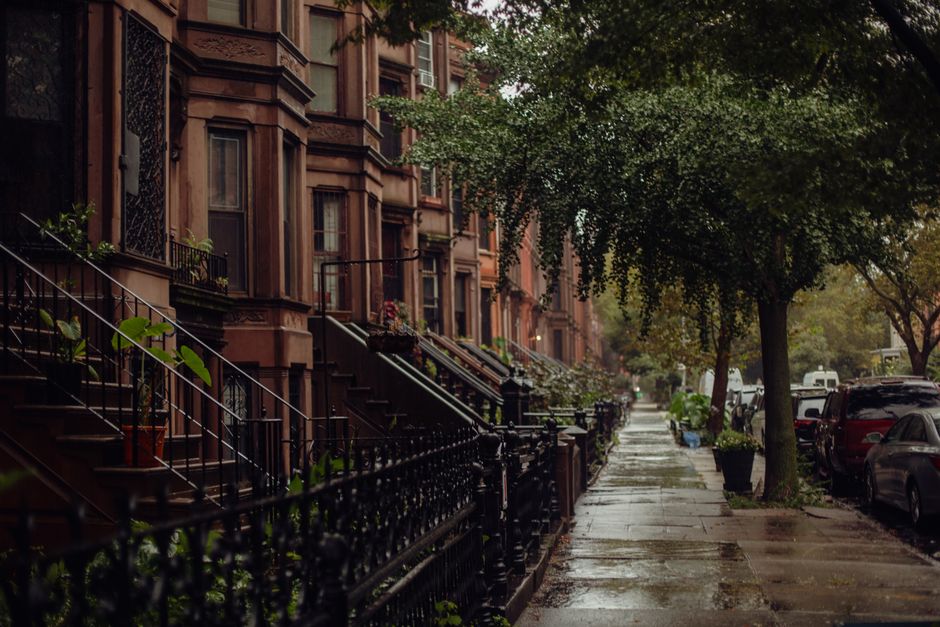
Park Slope is the default landing spot for Manhattan families. $1.7M median sale price, $4,100 median rent. Late-19th-century brownstones on tree-lined streets between 5th Avenue and Prospect Park West. PS 321 on 7th Avenue is the elementary school zone families pay the premium for. 5th and 7th Avenues run the commercial corridors: brunch on 5th, family-store on 7th. The F and G trains serve 4 Av-9 St, Smith-9 Sts, 7 Av, and 15 St-Prospect Park. Midtown is 40 to 45 minutes door to door.
Brooklyn Heights: The Commute Winner
Brooklyn Heights is the fastest-commute Brooklyn neighborhood from a transit standpoint and the cheapest of the three on median sale price ($1.3M). The reason for the lower median: heavy co-op stock, where board approval is a barrier some buyers will not clear. Rents are $4,500, the highest of the three. The transit math is unbeatable: the 2 and 3 at Clark Street, the 4 and 5 at Borough Hall (weekdays). Lower Manhattan is 8 minutes. Midtown is 25 to 30. The Promenade and the landmarked historic district make it feel like a small New England town with the Manhattan skyline as a backdrop.
Carroll Gardens: The House-with-a-Yard Move
Carroll Gardens has the highest median sale price of the three at $2.3M because it has what the other two cannot: row houses with actual front yards. Three- and four-story rowhouses, prewar bones, the Italian-American backbone still visible on Court and Smith Streets. F and G at Carroll Street. Median rent $4,500. Very little condo or elevator inventory, so the housing stock is overwhelmingly owner-occupied family homes. If you want the closest Brooklyn equivalent to a suburban detached home without leaving the city, Carroll Gardens is the answer and the premium is the price of admission.
Commuting from Brooklyn to Manhattan in 2026
- Brooklyn Heights to Midtown: 25 to 30 minutes via 4/5 from Borough Hall.
- Brooklyn Heights to Lower Manhattan: 8 to 12 minutes via 2/3 from Clark Street.
- Park Slope to Midtown: 35 to 45 minutes via F (with the longest leg from 15 St-Prospect Park).
- Park Slope to Lower Manhattan: 30 to 40 minutes via F to W 4 St transfer, or 2/3 from Atlantic Av-Barclays Center.
- Carroll Gardens to Midtown: 35 to 45 minutes via F from Carroll Street.
- Carroll Gardens to Lower Manhattan: 15 to 25 minutes via F to Jay Street and 2/3 transfer.
Walk the route on a Tuesday morning and a Friday evening before you sign. The schedule on paper and the schedule on the platform are different.
Financial Reality of Moving from Manhattan to Brooklyn
The borough-wide numbers say Brooklyn is cheaper. The neighborhood numbers say it depends. A $1.3M budget gets you a Brooklyn Heights co-op or a Manhattan studio. A $2.3M budget gets you a Carroll Gardens row house or a Tribeca two-bedroom. A $4,500 monthly rent budget gets you a one-bedroom in Brooklyn Heights or a similar in a Murray Hill walk-up.
The 2026 wrinkle: Brooklyn rental inventory is up, Brooklyn landlords are offering more concessions (one to two months free, owner-paid broker fee), and Manhattan rents are still climbing. If you are renting first before buying, the negotiating leverage has moved decisively to Brooklyn. Ask every Brooklyn landlord what concessions they are offering before you commit.
How to Choose the Right Brooklyn Neighborhood for Your Manhattan Move
- Choose Brooklyn Heights if: Commute time is the variable that matters most. You can clear a co-op board. You want a landmarked, quiet, walkable neighborhood with Manhattan in your sightlines.
- Choose Park Slope if: You have kids or plan to. You want stroller infrastructure, Prospect Park, and the deepest family-oriented commercial corridor in Brooklyn.
- Choose Carroll Gardens if: You want a row house with a front yard. You are not financing-constrained. You value the village feel and intimate scale over modern amenities.
Frequently Asked Questions
How much money do I save moving to Brooklyn from Manhattan in 2026?
Borough-wide, the median Brooklyn renter saves $1,000 a month vs Manhattan ($3,750 vs $4,750). The median Brooklyn buyer saves $368,000 on purchase price ($1.027M vs $1.395M). Required income for the 30 percent rule is $35,000 a year lower in Brooklyn ($159,396 vs $195,120). Neighborhood-level savings vary; Carroll Gardens at $2.3M actually exceeds the Manhattan median.
Which Brooklyn neighborhood is cheapest for Manhattan transplants in 2026?
Of the three top landing spots, Brooklyn Heights has the lowest median sale price at $1.3M, driven by heavy co-op stock. Park Slope is $1.7M, Carroll Gardens is $2.3M. For renters, Park Slope is the cheapest of the three at $4,100, vs $4,500 in Brooklyn Heights and Carroll Gardens.
How long is the commute from Brooklyn to Manhattan in 2026?
Brooklyn Heights to Midtown is 25 to 30 minutes via the 4/5. Brooklyn Heights to Lower Manhattan is 8 to 12 minutes via 2/3. Park Slope and Carroll Gardens are 35 to 45 minutes to Midtown via F/G. All three are well-positioned for Lower Manhattan. None of them are walking distance to Hudson Yards.
Is now a good time to move from Manhattan to Brooklyn?
Yes for renters, with caveats for buyers. Brooklyn rental inventory is up year over year and landlords are offering more concessions than Manhattan landlords. That tilts the renter market in Brooklyn. For buyers, the Brooklyn median is appreciating at 8.7 percent year over year vs Manhattan's 5.2 percent, so waiting costs you on the buy side.
What is the household income required to live in Brooklyn vs Manhattan in 2026?
To stay inside the 30 percent rule on rent, Realtor.com Q1 2026 puts the required income at $16,260 a month ($195,120 a year) for Manhattan and $13,283 a month ($159,396 a year) for Brooklyn. The borough-level gap is about $35,000 a year in required gross income.
Moving to Brooklyn from Manhattan in 2026: Real Estate GuideBrooklyn Real Estate2026-06-27T08:53:43+00:00